
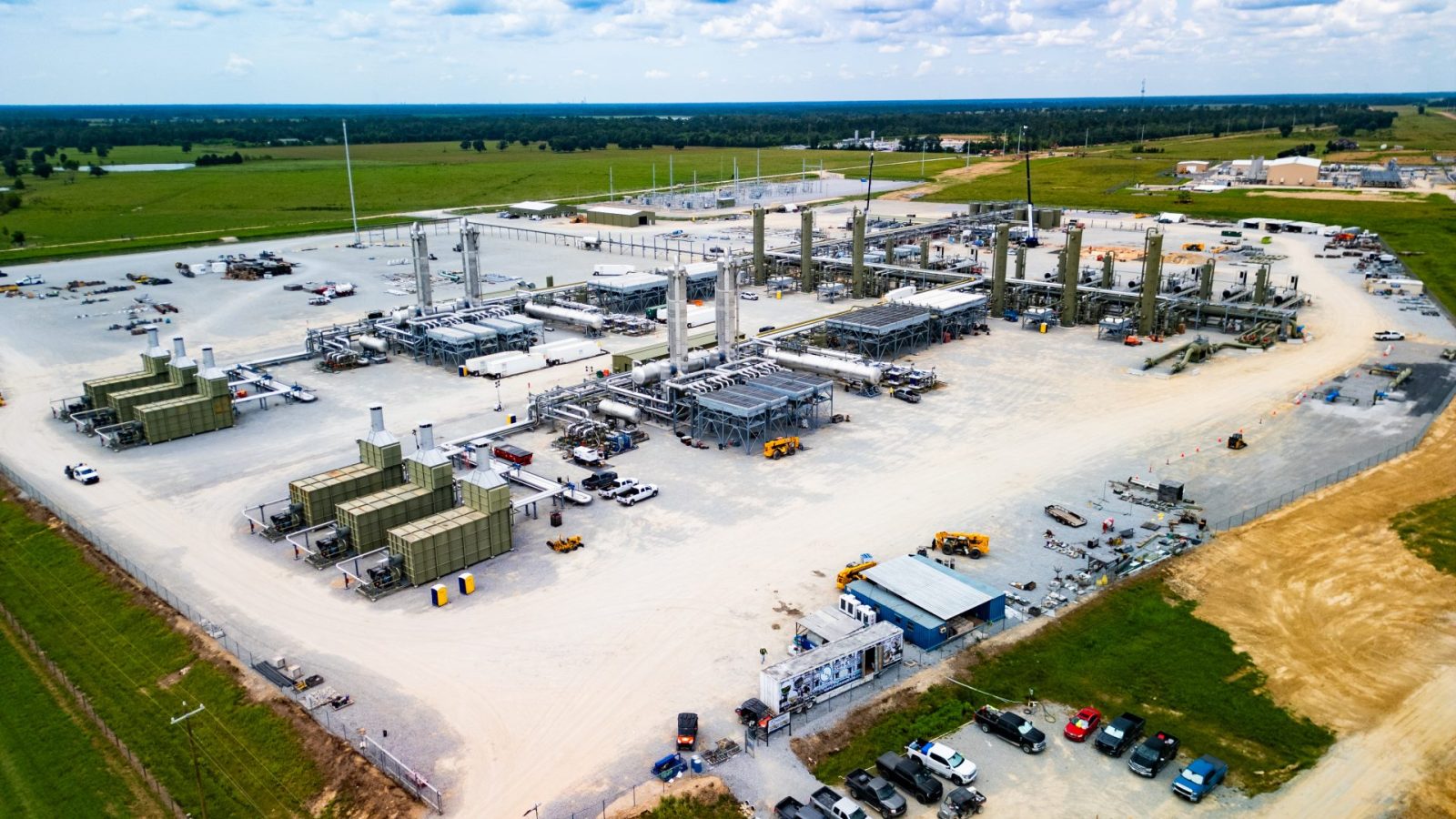
In the midstream sector, natural gas doesn’t move from the wellhead to the burner tip without significant processing. Before it can be safely transported through pipelines or sold on the market, it must be treated to remove impurities that pose environmental, safety, and performance risks.
One of the most essential of these processes is amine sweetening—a chemical absorption method used to remove acid gases, particularly hydrogen sulfide (H₂S) and carbon dioxide (CO₂), from raw natural gas.
Why remove H₂S and CO₂?
Natural gas often contains varying levels of acidic contaminants:
- H₂S – Highly toxic and corrosive. Even at low concentrations, it poses significant health hazards and can lead to sulfide stress cracking of steel in pipelines.
- CO₂ – While non-toxic, it reduces the heating value of natural gas and contributes to pipeline corrosion when mixed with water, forming carbonic acid.
Federal and industry pipeline specifications typically limit:
- CO₂ to less than 2% by volume
- H₂S to less than 4 parts per million (ppm)
Failure to meet these specifications can lead to product rejection or costly reprocessing. That’s why amine systems are a foundational element in gas processing plants and central delivery points (CDPs).
The Chemistry Behind Amine Sweetening
The process involves an aqueous solution of alkanolamines—organic compounds containing both alcohol and amine groups. Common amines used include:
- MEA (Monoethanolamine) – Highly reactive, used for low gas flow rates or where high H₂S removal is required
- DEA (Diethanolamine) – Less corrosive than MEA, suitable for moderate CO₂ and H₂S content
- MDEA (Methyldiethanolamine) – Selective for H₂S over CO₂, often blended with activators for efficiency
Here’s how the process works:
Gas Contacting | Sour gas enters a contact tower, flowing upward through a countercurrent stream of amine solution. The amine chemically reacts with H₂S and CO₂, forming soluble salts (e.g., ammonium bisulfide and ammonium bicarbonate).
Sweet Gas Exit | The now “sweet” gas, free of acid gases, exits the top of the column, typically at pipeline-grade quality.
Regeneration | The rich amine solution, loaded with absorbed acid gases, is sent to a regenerator (or stripper). Heat is applied via a reboiler, breaking the chemical bonds and releasing H₂S and CO₂ as gas. These acid gases are vented to a flare, sulfur recovery unit (SRU), or other disposal system, depending on site setup.
Recycling | The lean amine is cooled and pumped back to the contact tower, creating a closed-loop system that maximizes efficiency.
This regenerative cycle allows continuous operation with minimal chemical loss—making it both economically and environmentally beneficial.
Integration Into the Midstream Supply Chain
Amine sweetening units are typically located at gas processing plants, central delivery points, or compressor stations with sour gas service. Their function is essential for conditioning raw gas before it enters transmission pipelines or is further processed to extract natural gas liquids.
Without amine treatment, sour gas poses serious risks such as corrosion of downstream equipment, safety hazards due to toxic gas exposure, noncompliance with transmission specifications and reduced marketability of the gas product.
Evers & Sons supports operators across the U.S. with the construction, integration, and maintenance of amine sweetening plants and other critical gas processing infrastructure. From upstream separation to downstream distribution, we understand how each process step supports the next. In a world where demand for clean-burning, domestically produced energy continues to rise, processes like amine sweetening are helping shape a safer, more efficient energy future.
Share this Post